
The capsule sticks halfway down and I'm chasing it with lukewarm coffee when my phone buzzes: a screenshot from Soren, an online developer friend up in Portland, showing off monitor-arm setup number four for the year. Three years into staring down three monitors for a living, and fourteen months into testing seven different eye supplements for what my optometrist eventually called digital eye strain, I've landed on one conclusion that has nothing to do with ingredient counts: what predicts whether a bottle earns a permanent spot on my desk is capsule burden, dosing simplicity, and how long you let the experiment run before calling it a failure — a very on-brand problem for someone who chose a career staring at glowing rectangles for a living.
Quick disclosure before going further: this site runs on affiliate links, and if you buy through one I earn a commission at no extra cost to you. Everything below comes from supplements I bought and tracked myself — I'm a developer, not an optometrist, so treat this as debugging notes, not medical advice.
What Actually Fixes Digital Eye Strain Isn't a Longer Ingredient List
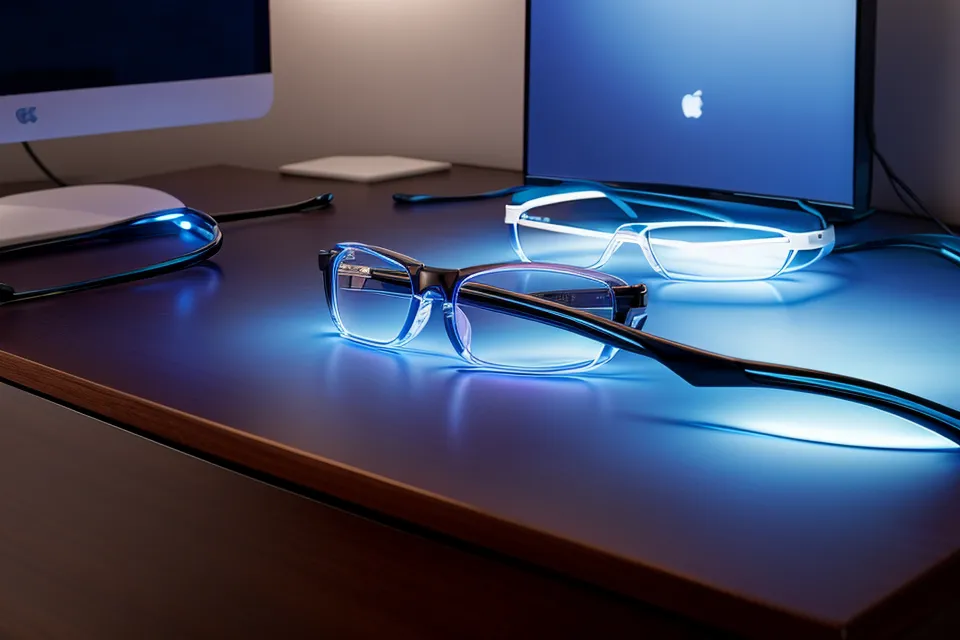
That diagnosis — digital eye strain — came after I'd already tried the obvious fix first: a real pair of prescription blue light computer glasses, prescribed at an actual optometry visit. By late afternoon the same grainy, sandpaper feeling behind my eyelids showed up anyway, glasses on or off. That failure is what pushed me toward supplements in the first place, and toward treating the whole search like a testing problem instead of a shopping problem — change one variable at a time, and give it a real observation window before drawing a conclusion.
Cost went into the same spreadsheet as everything else, and it swung anywhere from thirty to eighty bucks a month depending on which bottle I was running that cycle (the range held steady across the full fourteen months). None of the pricier options automatically outperformed the cheaper ones, which is the first sign that ingredient count and price tag are worse predictors than people assume.
Why More Ingredients Isn't a Better Spec
TheyaVue was the first bottle I actually bought, grabbed off a shelf at the Whole Foods Market on North Lamar because it was the cheapest option in reach and listed twenty-four ingredients on the label. More ingredients sounds like a better spec until you're the one swallowing it every morning. The capsules were large enough that I dreaded that first dose more than the headache I was trying to prevent.
Twenty-four variables solving one problem reads like a design smell if you've ever inherited a bloated codebase, and it turned out to behave like one here too — nothing about the extra bulk translated into better screen endurance for me. If you want the full glossary of what's actually inside these formulas and why, I've laid that out ingredient by ingredient in a separate post; this one stays focused on what changed for me at the desk.
Later, once I started looking at how competitive gaming setups handle eye recovery, I shifted toward formulas built around Lutein and Zeaxanthin instead of raw ingredient count. The specific ratios different brands use for those two carotenoids are their own rabbit hole I've mapped out elsewhere — the short version here is that quality mattered more than quantity.
Supplement Testing Signals: How I Judge Whether Something Is Working
Whether a supplement is doing anything shows up in smaller signals than one dramatic before-and-after, which is why a spreadsheet replaced my memory early on (memory is a notoriously buggy data store). The methodology behind that tracker — how I score a rough day against a good one — is its own post, so I won't repeat the whole system here.
One of the plainest checks I use has nothing to do with a screen at all: catching my reflection in the bathroom mirror and noticing the whites of my eyes looked noticeably less pink than they had just a few days before. Signals like that are easy to talk yourself into, so I only count it once it lines up with the fatigue notes from the same week.
Dryness and fatigue read as the same complaint if you're not paying close attention, but they're different failure modes in my tracking, and that split gets its own detailed write-up rather than a paragraph here. The 20-20-20 rule came up in nearly everything I read early on, and on its own it never moved my numbers much — why that wasn't enough deserves more room than a footnote, so I've covered it in full separately.
None of this replaces getting the physical setup right first. Soren, a developer friend of mine up in Portland (we swap ergonomics gear photos more than actual conversation), has cycled through four different chair and monitor-arm setups in a single year chasing the right angle, and he's not wrong that hardware matters as much as anything you swallow — I've documented my own desk baseline in a separate guide rather than repeating it here.
A reader named Priska, a copywriter working fully remote, sends back tracking notes of her own most weeks, usually more organized than mine. It's a good reminder that this kind of testing rewards patience more than any single ingredient does — you're looking for a trend line, not a single data point.
If you want the full week-by-week numbers instead of the summary, I broke down testing seven eye supplements from my Austin desk in a lot more detail elsewhere.
Dosing Simplicity as a Technical Requirement, Not a Nice-to-Have
By the time I got to VisiFlora, I'd already cycled through enough bottles to know that dosing complexity was its own tax on compliance. The full rotation — what I tried, in what order, and how I decided when to drop one supplement for the next — is a longer story told in full in a separate post.
VisiFlora's pitch centers on the gut-eye connection, which sounded like blaming a backend database issue for a frontend rendering bug until I actually sat with the logic for a while. What sold me wasn't the theory, though. It was a single capsule once a day, no juggling three pills at three different times.
After months of multi-pill routines, one dependency-free capsule felt like swapping a tangled build process for something that just runs without extra configuration. Whether or how well any of that actually gets absorbed is a deeper question than a spreadsheet can answer on its own, and it's one I picked apart in a separate post after returning a couple of other bottles over exactly that concern.
iGenics sat somewhere in between the two extremes — a well-known name built around twelve vision-supporting ingredients instead of TheyaVue's two dozen, though the capsules stayed on the larger side and it took noticeably longer for me to register any change than it did with VisiFlora.

Where Blue Light Glasses and Supplements Actually Overlap
That doesn't make the blue light glasses useless — they're one layer, not the whole stack, and I've put together a fuller comparison of glasses against supplements in another post if that's the specific question you're trying to answer.
My own optometrist stays openly skeptical of supplements as a category, which is a reasonable position I've sat with and written about at length elsewhere rather than trying to settle in one paragraph here.
What fourteen months of tracking actually gives me is narrower than a verdict either way, and more useful: three technical questions worth asking before buying anything — how many capsules per day, how many active ingredients you're realistically swallowing, and how many weeks you're willing to commit before judging the result.
Judged against those three questions, VisiFlora is what stayed on my desk, and the fuller look beyond blue light glasses breakdown has the reasoning laid out step by step if you want it.
If you're running the same three-monitor gauntlet every day, the VisiFlora approach is where I'd start testing, and the complete moving from code blurs to clarity write-up has the month-by-month notes if you want to replicate the process yourself.