Seven bottles rotated through my desk drawer over the course of this experiment, and by the time I closed the spreadsheet, exactly one of them still had a spot next to my keyboard. That ratio is the real headline here, one keeper out of seven, because testing eye supplements as a developer turns out to have less to do with miracle ingredients and more to do with running a rotation strict enough to actually separate signal from screen-fatigue noise.
Quick disclosure before the breakdown: a few of the links below are affiliate links, and I earn a commission if you buy through them at no extra cost to you. I'm not an optometrist or any kind of health professional — just a developer who does eye-health testing on himself the way I'd profile a slow application, and who got tired enough of losing afternoons to eye fatigue to track the whole thing properly.
What Digital Eye Strain Looked Like on Three Monitors
My optometrist put a name on it early: Computer Vision Syndrome — screen-fatigue territory that comes standard with a developer lifestyle spent staring at three panels for a living, which is a fairly on-the-nose irony I try not to think about too hard while I'm writing about how to fix it.
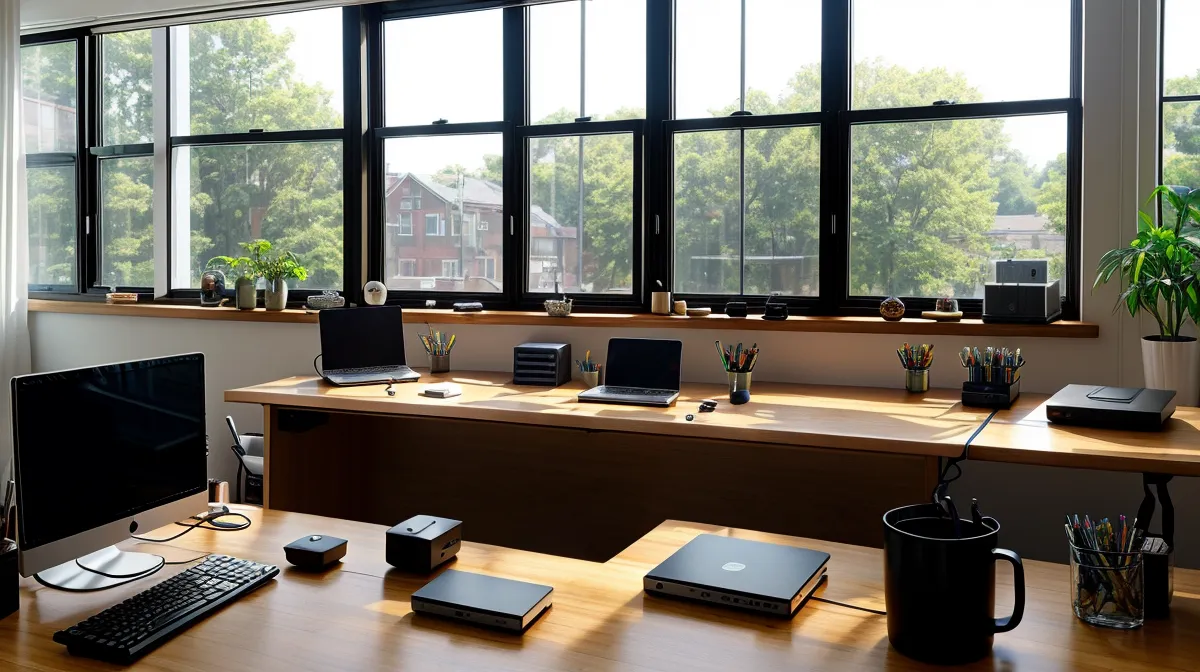
The desk itself is a U-shaped standing setup wedged into the second bedroom of the rented bungalow I work from in East Austin — three 27-inch monitors fanned out in a shallow arc, a strip of warm-amber light glowing behind the center screen, and the east-facing window's blackout shade cranked halfway down by the time the sun swings around at noon. I remember one deploy that ran long, my eyes still locked on a diff well past midnight while the laptop fan climbed to a higher, straining pitch as the build churned away in the background. That's roughly when I stopped treating the fatigue as a one-off bad day and started treating it as a pattern worth tracking.
Why Blue Light Glasses Didn't Solve the 3pm Wall
Before any supplements entered the picture, I went through the standard playbook. The 20-20-20 rule got a real trial, every twenty minutes, twenty feet away, twenty seconds, and it helped a little without touching the wall I hit most afternoons. My optometrist eventually fitted me for a pair of prescription blue light computer glasses, not the cheap kind, tuned specifically for my desk distance, and while the glare across my monitors did ease up, the 3pm wall showed up right on schedule anyway.
That whole progression — rule, then glasses, then supplements — is mapped in more detail in my fourteen-month journey to fix digital eye strain, but the short version is that hardware-side fixes only got me partway there. Blue light mitigation on its own treats the light hitting the eye; it doesn't touch whatever is happening after that light lands, which turned out to be the part that mattered more for me.
Building a Rotation Protocol for Seven Supplements
Rotation ran across seven products between late spring 2025 and early summer 2026, one at a time, because running two at once would have made it impossible to credit any single one for a change. Keeping a rough spreadsheet — daily fatigue score, dose timing, monthly cost range — wasn't optional if the results were going to mean anything beyond a vague impression.
A developer friend of mine, Soren Tabata, who freelances out of Portland, has a habit of digging into PubMed for fun and firing off abstracts with zero context at odd hours — one landed in my inbox well after midnight mid-rotation, right when I was trying to decide whether a plateau in my numbers was real or just noise. Comparing notes with someone running a parallel spreadsheet mattered more, in the end, than any single study he sent.
Dryness and fatigue aren't the same complaint either, even though they show up around the same time of day, and the two are easy to mix up when you're only going by a general sense of tired eyes. If you want the deeper dive on where drops fit against supplements, I wrote separately about eye drops vs supplements for chronic screen fatigue; the short version is that drops solved a different problem than the one I actually had.
Does Absorption Timing Actually Change the Results?
Oral supplements don't behave like eye drops. There's no instant cooling sensation to tell you something happened, just a slow, cumulative absorption that either builds or it doesn't. A reader named Priska Mwenda emailed at one point asking whether I took my capsule with food or on an empty stomach, and that single question changed how I ran the rest of the experiment more than any product label did. Logging dose timing relative to meals, instead of just tracking the dose itself, made the fatigue-score trend lines noticeably easier to read.
The Workspace Baseline I Fixed Before Any Supplement
None of the supplement testing meant anything until the basics were handled first — monitor distance, ambient lighting, screen brightness matched to the room instead of maxed out by default. Getting that baseline right before adding a single capsule is its own topic, and one I'd point you toward rather than rehash here.
Ingredient lists across this category run from a tight handful of compounds to two dozen or more, and most of them lean on some combination of lutein and zeaxanthin as the base pairing, with untangling which additions actually pull their weight being its own separate rabbit hole I won't fully unpack in this post.
The Supplement Comparison: Three Contenders, One Clear Standout
Three products made it to the final round after the earlier eliminations. VisiFlora was the surprise pick of the whole experiment. Instead of stacking as many carotenoids as possible into one capsule, it's built around a gut-eye connection angle, and it was the first one where I noticed a real change in how I felt by late afternoon rather than just a marginal difference. The one-capsule daily dose was easy to keep up with, and the 60-day money-back guarantee made it a low-risk one to commit to for a few months.
iGenics came in as the reliable runner-up — a well-known name in the category with 12 vision-supporting ingredients and plenty of positive feedback from other users, though the capsules run larger than I'd like and it took noticeably longer before I could tell it was doing anything. TheyaVue, meanwhile, earned its spot as the budget entry: a sprawling 24-ingredient formula that's less focused than the other two but works as a reasonable way to find out whether your own system responds to internal eye support at all before spending more.
What tipped things toward VisiFlora long-term was the shift away from high-ingredient-count blends and toward something addressing inflammation more directly. My eyes weren't just tired from the light hitting them, they were struggling to recover from it, and that recovery gap is what the other two products never quite closed. My personal time-to-fatigue crept later into the day once that shifted, from the reliable 3pm wall toward something closer to early evening before I felt the pull to step away from the monitors.

Weighing Price Against Performance
A higher price tag didn't reliably predict better results across this category — I spent low three figures overall testing my way through seven products, and some of the priciest options weren't the ones that moved my numbers. I'll grant the obvious counterargument too: fourteen months is plenty of time for placebo effect and ordinary seasonal shifts in daylight and screen habits to explain part of any trend line, and I don't have a control group sitting next to me to rule that out.
Still, if the 3pm wall sounds familiar and you've already tried the glasses and the drops without much luck, VisiFlora is the one I'd point you toward first — it was the closest thing to an actual system fix I found across this whole experiment. Keep tracking your own patterns regardless of what you pick, because everyone's setup is different, and check in with your own eye doctor if the fatigue doesn't ease up.