Zilker Park's kite meadow is the flattest stretch of green I know in Austin — no shade, no phone signal worth mentioning, and nothing moving faster than a kite string. It's about as far as my eyes get from a monitor in an average week. That distance matters, because vision health for an Austin freelancer working behind three screens stopped being about the eye chart a long time ago; it's about managing digital eye strain day to day, using whatever combination of habits and supplement testing actually moves the number on my tracking sheet. This is the routine that came out of a year-plus of that testing, five habits deep, with iGenics as the one piece that's stuck around the longest.
Quick disclosure before anything else: I'm not an optometrist, not a doctor, and not any kind of health professional — just a developer who logs his own eye fatigue the way he'd log a slow API response. This site runs on affiliate links, so if you buy through one, I earn a commission at no extra cost to you. I only mention iGenics here because it went through the same multi-month testing process as everything else on my list, and it's the one I still recommend most when people ask where to start.
How Digital Eye Strain Started Showing Up in My Commits
My afternoons used to fall apart around the same point in the day. Code that made sense in the morning would blur into abstraction a few hours later, and I'd catch myself rereading a single line four or five times without absorbing it. An optometrist visit confirmed what I suspected: digital eye strain, brought on by somewhere around ten hours a day split across three monitors. Before I organized any of this into a real routine, I grabbed a generic multivitamin off a CVS shelf because the label mentioned eye support — it did nothing I could measure across a full bottle, and I dropped it without much ceremony. Blue light glasses were my next move, and they took the edge off screen glare without touching whatever was happening underneath, which is really what pushed me toward supplements and habit changes instead of hardware alone.
Scripting the 20-20-20 Rule So I'd Actually Follow It
The 20-20-20 rule is the first thing every eye doctor mentions: every 20 minutes, look at something 20 feet away for 20 seconds. Simple in theory, useless once I'm three functions deep into a bug and have forgotten the outside world exists. So I automated it — a background script on my machine that fires a notification every 20 minutes regardless of what I'm doing, with a rough target of 30 breaks across a 10-hour day.
Left to memory, I was hitting maybe five of those breaks on a good day. Automated, that number climbed close to my target, and the tight feeling behind my brow — the one I used to blame on caffeine — started showing up less often. Eye-rest protocols like this one only work if you actually run them, which sounds obvious until you're the one ignoring every third notification because a deploy is mid-flight.
iGenics and the Ocular Nutrition Stack
Supplements came next, and iGenics is where I started. Lutein and Zeaxanthin sit near the top of its ingredient list, and they show up on nearly every product in this category — I've stopped trying to explain the biology of why and just track what happens after I take them. I ran a four-bottle stretch of iGenics, which came out to around two hundred and seventy-six dollars total over the course of the trial, and logged the week-by-week numbers in 90 Days of iGenics: My Spreadsheet Results for Deep Coding Sessions.
The change wasn't sudden — it read more like a slow climb than a clean before-and-after on my tracking sheet. The clearest entry I've got is a hotfix deploy that ran past midnight sometime around week seven: the screen was still holding focus instead of swimming the way it usually did that late, and that's the log entry I keep pointing back to. Whether that comes down to how well the ingredients absorb, the timing of when I take it, or just my body adjusting to a new pill each morning is above my pay grade — I'm not chasing that answer, only the result. The capsules themselves are on the larger side, which is a minor annoyance every morning, and it took close to seven weeks before the improvement felt consistent rather than lucky.
Does Better Lighting Actually Change Anything?
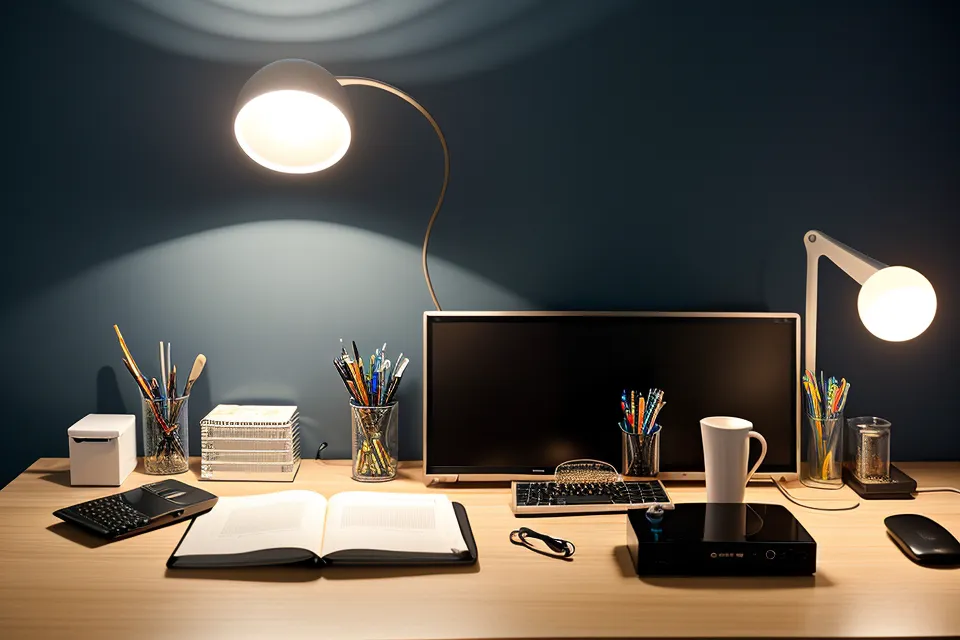
For a long time I coded in a dark room with nothing but monitor glow on the walls, a rookie setup that cranks the contrast between screen and surroundings until your pupils are doing more work than they should. These days my three 27-inch monitors curve into a shallow U on a standing desk that spans one corner of the spare bedroom in my East Austin rental that doubles as a workspace, and a low warm-toned light sits behind the middle screen instead of nothing at all. The blinds on the window that catches the morning sun stay lowered about halfway once the light gets strong enough to compete with the screens.
Griffin, a developer friend who tends to own the next piece of desk hardware before I've even heard its name, had something similar rigged up before I bought mine. Getting that baseline right came before any supplement did, honestly. No pill fixes a room that's actively working against your eyes. My eye fatigue spreadsheet, the same log I use to test every habit and supplement in this routine, showed a real drop in how often I reported that burning sensation after the lighting change.
Switching to the Gut-Eye Approach With VisiFlora
By the time I'd cycled through several other supplements on my list, I wanted to test a different angle entirely: whether gut health had any real bearing on eye comfort, not just direct nutrient support. That's what pulled me toward VisiFlora, a one-capsule product built around that gut-eye framing rather than iGenics' broader twelve-ingredient approach.
A co-working acquaintance of mine, Joaquin, ordered his own bottle of VisiFlora before I'd even finished my first month of tracking it — he's a graphic designer who spends upward of nine hours a day on color-critical work and started hitting the same afternoon wall I did, and he's never been one to wait for someone else's results before trying something himself. My own numbers moved faster with VisiFlora than with anything else on the list; the gritty feeling I associate with a long stretch of screen time — which reads differently on my tracking sheet than plain fatigue does — eased up within a few weeks. The full week-by-week version is in VisiFlora Review: 60 Days of Testing, if you want the granular data.
Hydration and Movement: The Habit I Almost Skipped
Hydration felt like the boring habit on this list, the one I kept skipping because it doesn't come in a bottle with a label to track. I started logging water intake next to screen hours anyway, mostly out of curiosity, and the pattern showed up faster than expected — on days I drank noticeably less, my fatigue score climbed regardless of which supplement I'd taken that morning.
I won't pretend to know exactly why dehydration affects eye comfort the way it does; I just know that it does, and now every 20-20-20 break doubles as a cue to stand up and drink some water. It's the least interesting fix on this list and possibly the one with the biggest effect.
Which Supplement Actually Fits Your Routine?
Between iGenics, VisiFlora, and the rest of what I've tested over the past year-plus, I keep a running reference of what's actually in each bottle's ingredient list, mostly so I stop re-looking up the same compound every time a new product lands in my inbox. I also don't put much weight on the "clinically studied" badge that seems to be printed on every label in this category — my own tracking sheet has more influence on what I buy next than any claim on the box does. Here's how the three I'd actually recommend compare, cost and outcome side by side:
| Product | Monthly Cost | Primary Benefit | My Verdict |
|---|---|---|---|
| VisiFlora | Around $69 | Gut-Eye Axis support | The Hero Pick for efficiency and speed. |
| iGenics | Around $69 | 12-ingredient vision focus | Solid Runner-Up for long-term clarity. |
| TheyaVue | Around $59 | Budget-friendly entry point | Good for those just starting to test. |
TheyaVue is the budget entry point of the three — the least expensive per bottle, built around a 24-ingredient formula, and a reasonable place to start if you're not ready to commit to a longer trial yet, though it's the one I've personally spent the least time with.
Software Filters vs. Supplement Investment
Blue light software and dark mode everywhere are essentially free, and I still run both — but they're filters, not fixes. They cut glare without doing anything for the underlying strain that shows up hours into a long session. Something like VisiFlora or iGenics asks for a bigger commitment upfront, in the neighborhood of $69 a bottle, and that's a real cost to weigh against a free software toggle.
For me, the tradeoff has been worth it. I'd rather spend on something that actually seems to move my numbers than save the cash and watch my afternoons keep degrading.
My 3 PM wall isn't gone completely, but it's rare enough now that I notice it showing up instead of expecting it by default. The habit that mattered most wasn't the supplement or the lighting or the scripted breaks on their own — it was tracking well enough to tell which one was actually doing the work. If you're dealing with the same afternoon crash, don't just add another product to the pile: start a log, change one variable at a time, and give it enough weeks to show a real trend before you decide it's not working. If you want a place to start on the supplement side, VisiFlora is the one I'd point a friend toward first — though your own tracking sheet, not mine, should be what tells you it's working.