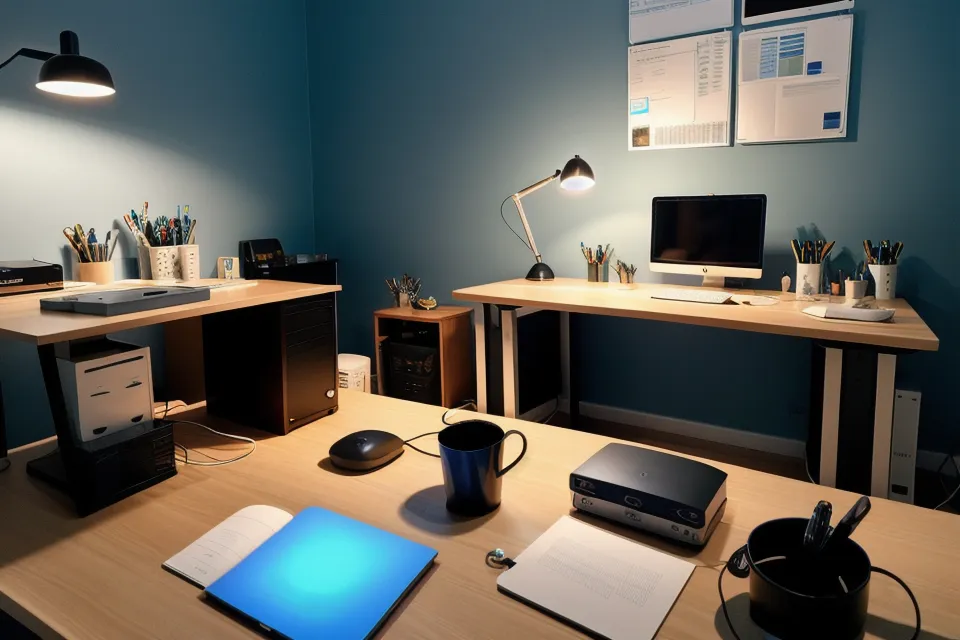
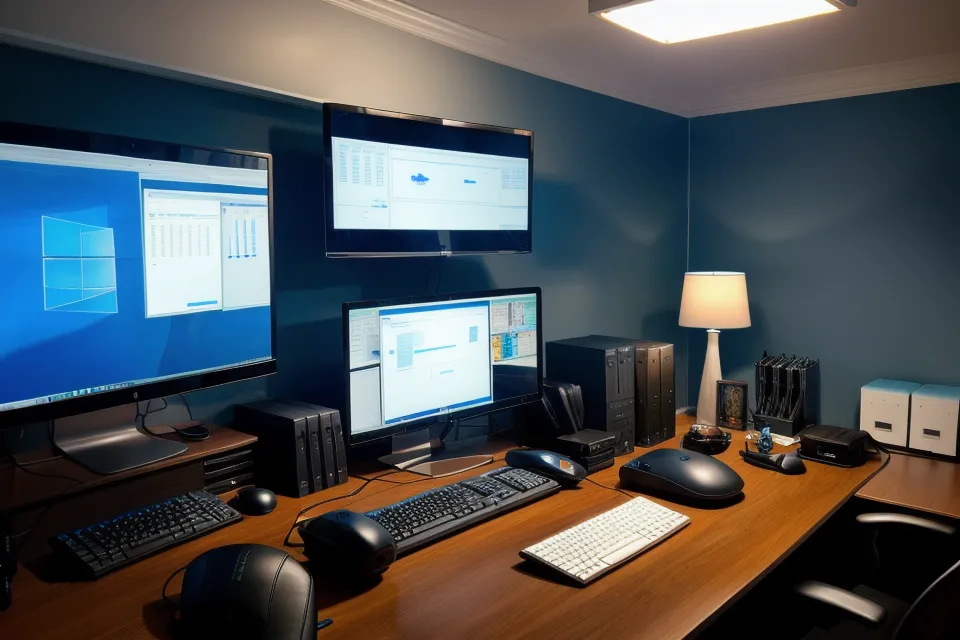
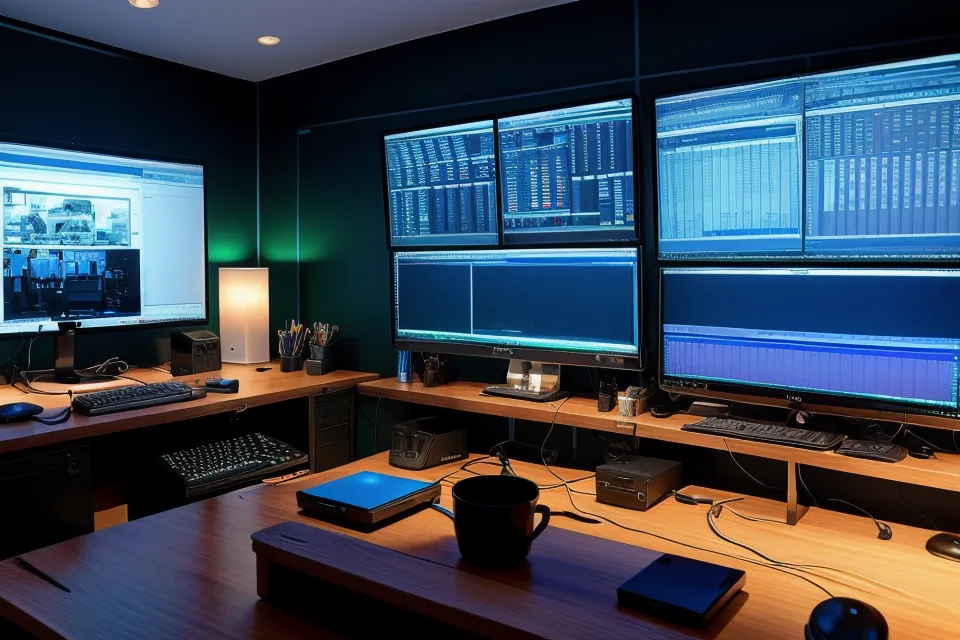
Three monitors will always outlast one pair of thirty-eight-year-old eyes in a staring contest. That's the blunt way my optometrist put it after three years of fully remote work, and it's more or less the premise behind every bit of screen-fatigue tracking, supplement-testing, and eye-health-tech tinkering I've done out of my Austin home office since. My desk wraps two walls of what used to be a spare bedroom, three monitors bent into a shallow arc in front of a standing desk, and for the first stretch of working this way I figured the occasional sore eye was just the toll of choosing a career that lives entirely on a screen. That assumption didn't survive an eye exam.
She didn't say much when she got to my numbers that visit. Just a pause over the chart, a flip back to the year before, one raised eyebrow before she told me they'd moved in the wrong direction. Digital eye strain, she called it, which by now is basically the default diagnosis for anyone whose job is staring at code for a living. She was skeptical that any supplement would do much for it, and I didn't argue much — the evidence on that front is thin, and I went in already knowing it.
Comparing My Screen Setup to My Actual Eyes
One of my screens runs at 3840 x 2160, a number that looks great on a spec sheet and means nothing once the text on it starts swimming by the middle of the afternoon. I was already running the 20-20-20 rule before any of this started, and the desk and monitor arrangement were about as dialed in as they were going to get — an amber-toned light strip behind the center screen, shades pulled halfway down against the east-facing window by midday. None of it was wrong, exactly. It just wasn't enough on its own.
What I actually tracked, in a spreadsheet that got messier by the month, was the dry scrape of my eyelids by evening and a throb that liked to set up behind my left eyebrow on documentation-heavy days. Those turned out to be two different complaints, even though I filed them under the same "eyes are done" heading for longer than I'd like to admit.
Why Cutting Screen Time to Eight Hours Didn't Fix Anything
Before I touched a single pill, I tried the boring fix first: a hard cap of eight hours of screen time on weekdays, tracked and enforced like a sprint deadline (poorly, as it turned out). Freelance work doesn't respect caps like that. A client call ran long, a deploy broke at the worst hour, and the cap slid a little further every week until it wasn't really a cap anymore. Even on the weeks I held the line, the afternoon headaches didn't budge. That was the first real sign this wasn't purely a volume problem.
Seven different supplement formulations rotated through that spreadsheet over the following fourteen months. The first two were multivitamins with "eye support" printed somewhere on the label, mostly vitamin C and E dressed up for the category, and they did nothing I could measure. Not every bottle claiming to help your eyes has the same thing inside it, which I found out the slow way. Eventually I landed on formulations built around Lutein and Zeaxanthin, the two ingredients everyone in this corner of the internet eventually points you toward, though I'll leave the exact ratios to people who've written whole posts on that specific question.
One early formulation carried a heavy dose of zinc, and it wrecked my stomach every time I took it before a morning call on an empty stomach. Trading a gut problem for an eye fix felt like a bad refactor, so that one got dropped fast.
Does Timing Matter More Than Dose?
A reader named Priska Mwenda emailed me partway through the experiment, a copywriter working fully remote out of Minneapolis who'd been through a near-identical string of shrugging optometrist visits before she found my writing, and asked a question I hadn't really sat with: was I tracking how much I took, or when I took it? That reframe stuck with me longer than most of what I'd read on the topic itself.
Soren Tabata, a developer I know from a contractor Slack group and have never actually met in person despite over a year of swapping supplement spreadsheets with him, texted me a research abstract at some odd hour not long after that, no explanation attached, just a link. Between the two of them I started paying attention to what I ate around the same time as the pills instead of just the pills themselves — a heavier breakfast, food in general instead of black coffee on an empty stomach — and my results stopped looking so random.
By the seventh week of that adjusted stretch, the afternoon headaches were showing up less often, not gone, just less reliable, which counts as real progress when you've had a headache predictable enough to set a clock by for over a year. Eye drops stayed part of the routine the whole time, and that first cold splash hitting a bone-dry eye in the early afternoon never stopped catching me off guard, no matter how many times I'd done it that week.
Austin, Fourteen Months In
Some weeks I'd take the laptop to a corner booth at Domain Northside just to look at something that wasn't my own three monitors for an afternoon. It didn't fix anything on its own, but it broke up the pattern enough to notice when the pattern itself was the problem. I've gone deeper on where blue light glasses fit into all this in Beyond Blue Light Glasses: A Web Developer's Search for Eye Relief, and written up the specific formulations that actually moved the needle, week by week, in Testing Seven Eye Supplements From My Austin Desk.
Fourteen months of tracking taught me less about any single ingredient than about my own bad habits: eating badly, capping screen time and then blowing straight past the cap, expecting a supplement to patch over a routine that needed an actual fix. The least surprising part of all this is that a guy who ruins his eyes for a living spends his spare hours squinting at a spreadsheet about it. The headaches are down. The eyes still ache some days. Nothing here replaces an actual exam, and nothing in a spreadsheet I built myself should be mistaken for a clinical trial. So talk to your own optometrist before you touch your own settings.