
What if the blue light glasses on your desk right now were only ever addressing a third of your problem? That's the question I kept circling back to after mine stopped working — not broke, just stopped making a dent in the mid-afternoon fog that shows up somewhere between a late-morning pull request and the first stretch of dead air after lunch. Digital eye strain gets sold as a single-lens problem with a single-lens fix, and that framing is exactly why so many remote developers end up stuck on step one of screen eye care instead of building something that actually holds up across a ten-hour day at three monitors.
My optometrist eventually put a name on what I was feeling — Computer Vision Syndrome, or digital eye strain, which is a fancier way of saying my eyes were losing an argument with my job. I'm not a doctor and I'm not going to pretend otherwise; if you're dealing with something similar, a real conversation with your own eye doctor should come before any supplement regimen, not after. Some of what follows draws on the same testing habit I write about in my home office eye fatigue experiment, if you want the fuller notes.
Quick disclosure before we go further: this article contains affiliate links, and if you buy something through one of them, I earn a commission at no extra cost to you. I only write about products I've actually run through my own testing, not ones I've just read press releases for.
The Blue Light Myth Has a Kernel of Truth, Not the Whole Answer
Cutting blue light does something — screens really do put out more of it than most ambient light, and filtering some of that range can take the edge off glare late in the day. Where the myth breaks down is treating the lens as the entire fix, when eye strain from a screen job behaves more like a stack of smaller failures: blink rate drops when you're focused, screen distance rarely changes, and the muscles doing the focusing don't get a real break just because the light hitting them is warmer. Glasses handle exactly one layer of that stack. The other layers don't care what color your lenses are.
Why Did the Headache Come Back Even With the Glasses On?
Glasses were my first move, along with nudging the refresh rate on every monitor and trying to stick to the 20-20-20 rule — a fine idea in theory and nearly impossible mid-flow-state when you're three functions deep chasing a memory leak. That rule gets its own full treatment elsewhere on this site; here it's enough to say it wasn't the missing piece for me.
For a stretch, I tried pressing a cold, damp cloth over my eyes during lunch, treating it like forcing a hardware reset on a frozen machine. It felt fine for about ninety seconds and did nothing for the ache that showed back up before my next call. A friend of mine — he plays drums in a local cover band and has strong opinions about warm-up routines — asked me once why I'd bother optimizing supplements if I wasn't willing to just look away from the screen more. Fair question. I run loops around Mueller Lake Park most evenings, and that's genuinely the only stretch of the day where nothing backlit is in front of my eyes, but it never touched the 3pm wall on its own — mildly embarrassing, given that my day job is basically an extended relationship with a glowing rectangle.
One 3pm standup ended not long after that, and it took me a few minutes to register what hadn't happened — no reach for the eye drops, no rubbing at my eyes mid-sentence, nothing. It wasn't dramatic. It was just an ordinary afternoon that quietly didn't hurt, which is a strange thing to notice about your own face.
The fan is usually my cue for something else entirely. It steps up into a whinier pitch the second a long build job kicks off, and that's become as good a break signal as any timer app — a forced few minutes where the machine is busier than I am, which is about the only reliable excuse I give my eyes to look at something else.

The Supplement Detour: TheyaVue, iGenics, and VisiFlora
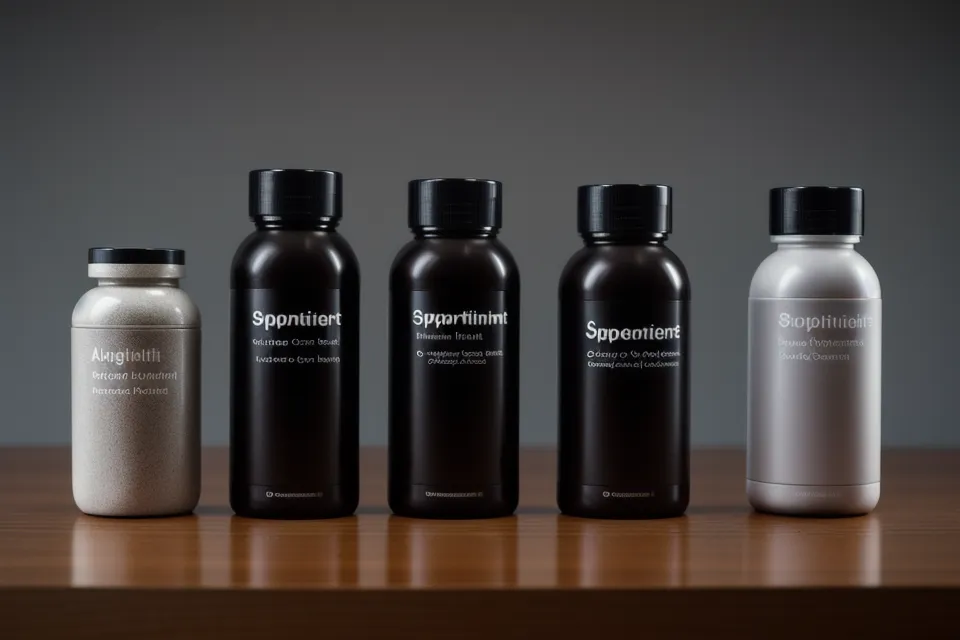
Supplements entered the picture once it was clear breaks and glasses weren't the whole system fix. Testing them one at a time instead of stacking everything at once turned into its own discipline — a whole separate post's worth of cycling through formulas rather than something I'll unpack here. TheyaVue was the first one I tried, mostly because it was the cheapest way to find out whether supplementation did anything for me at all: a formula built around a long ingredient list, on the theory that more inputs meant better odds of hitting whatever was actually causing the fatigue. It's a reasonable low-risk entry point, though a long ingredient panel isn't automatically a better one — cross-referencing what's actually in these formulas is a project of its own I won't get into here.
iGenics came next, trimmed down to a shorter, more focused ingredient list in noticeably larger capsules. Whatever it was doing took longer to show up in how my afternoons felt compared to the budget option — not a knock on it, just a different pace, the kind of thing you'd only catch if you were actually keeping notes week over week, which is its own habit worth writing about separately.
There's also a deeper rabbit hole around how well any of this actually gets absorbed — natural sources versus concentrated formulations — plus a whole separate ratio question around lutein and zeaxanthin specifically, both of which I get into properly in my longer supplement review rather than rehashing here.
VisiFlora ended up being the one that stuck, mostly because it leans on the gut-eye connection instead of stacking more of the same ingredients everyone else uses, and because a single capsule with coffee is a routine I can actually keep during a heavy sprint. It's worth saying plainly: dry eyes and eye fatigue aren't the same complaint, even though they tend to show up in the same afternoon window, and lumping them together is part of why so many people feel like nothing is working. VisiFlora also carries a 60-day money-back guarantee, which matters more to someone with a debugging brain than any ingredient panel does — if it doesn't run, I want a refund path.
Building a Screen Eye Care Stack Instead of Buying One Fix
Here's the actual rule I'd hand to another developer instead of a single product recommendation: if your eyes still feel gritty or tired by mid-afternoon while wearing blue light glasses, the lens isn't the layer that's failing — check what's happening underneath it first. That means an honest look at how often you're actually looking away from the screen, not just scheduling it, and whether what you're feeling is dryness, focus fatigue, or both, since they call for different responses. Only after that layer is accounted for does it make sense to test a supplement, and even then, treat it like debugging — change one variable at a time and actually track what happens instead of guessing.
Desk height and monitor distance are their own separate checklist worth running before or alongside any of this, and I'd rather point you toward keeping that checklist honest than pretend I can cover it properly here.
And when a product's marketing leans hard on claims that don't hold up to a second look, that's worth real skepticism — including the kind of pushback my own optometrist has given me on supplement claims generally, which is a longer conversation than fits in one post.
Final Verdict for the Three-Monitor Crowd
None of this changes how many monitors are on my desk or how many hours I spend in front of them — that part of the job isn't going anywhere. What changed is treating supplements as one layer of a stack instead of the whole stack. If you want a low-risk way to find out whether supplementation does anything for you personally, TheyaVue is the cheapest way to run that test. If you'd rather go with a more focused ingredient list and don't mind a slower ramp-up, iGenics is the solid runner-up.
For my own stack, VisiFlora is still the piece that's earned its spot — not because it's magic, but because it addressed the layer the glasses and the breaks couldn't touch, and the one-capsule routine actually survived contact with a real work week. If you're only wearing blue light glasses and still hitting a wall most afternoons, that's the layer worth testing next. The longer write-up has the fuller notes if you want to see how the testing actually played out.
| Product | Rating | |
|---|---|---|
| VisiFlora Top Pick | 8.9 | Read More → |
| iGenics | 8.2 | Read More → |
| TheyaVue | 7.8 | Read More → |
VisiFlora
Pros
- ✔ Unique focus on the gut-eye connection for inflammation
- ✔ Simple one-capsule daily dose fits into a busy dev schedule
- ✔ Noticeable reduction in afternoon headaches in my tracking
- ✔ 60-day money-back guarantee offers zero-risk testing
Cons
- ○ Premium price point compared to budget options
- ○ Only available via the official website