Eye yoga treats a tired focusing muscle like it needs more reps. Muscle relaxation treats the same muscle like it needs to stop moving entirely. I've compared both against my own fatigue-tracking spreadsheet, and only one of them actually changed my afternoons, which matters if you're doing real eye strain relief and supplement testing, not just a digital wellness routine you read about once and forgot.
Quick disclosure: I run affiliate links here, including one for VisiFlora further down — buy through it and I earn a commission at no cost to you. I'm not an optometrist, just a developer who tracks this obsessively.
Two Ways to Treat a Tired Focusing Muscle
My optometrist put a name on it: Computer Vision Syndrome, which is really just an official label for eyes that never get real rest. Some people call the whole cluster digital eye strain instead, which is accurate enough and not really the debate here. The muscle every eye yoga video promises to fix is the ciliary muscle (not that I fully understand its mechanics, and I'm not going to pretend otherwise), I just know it does more work staring at three monitors a few feet away than it ever does looking out at the kite meadow in Zilker Park, which is about the only real horizon I get most weekdays. Blue light glasses were the first thing I tried, long before any of this, and that's its own separate rabbit hole I've covered elsewhere.

Why Active Eye Yoga Underperformed in My Fatigue Scores
Active eye yoga sounded reasonable on paper — if a muscle is tired, exercise it. I ran ocular rotations, rapid blinking sets, and diagonal stretches during work sessions and logged the result the same way I log everything else, with a daily fatigue score. The pattern held up consistently: sessions with active eye yoga drills scored worse by evening than sessions where I skipped them and just closed my eyes for a minute instead. Pushing a muscle that's already working a ten-hour shift isn't rest, it's overtime with extra steps.
Comparing Palming and Near-Far Focus Side by Side
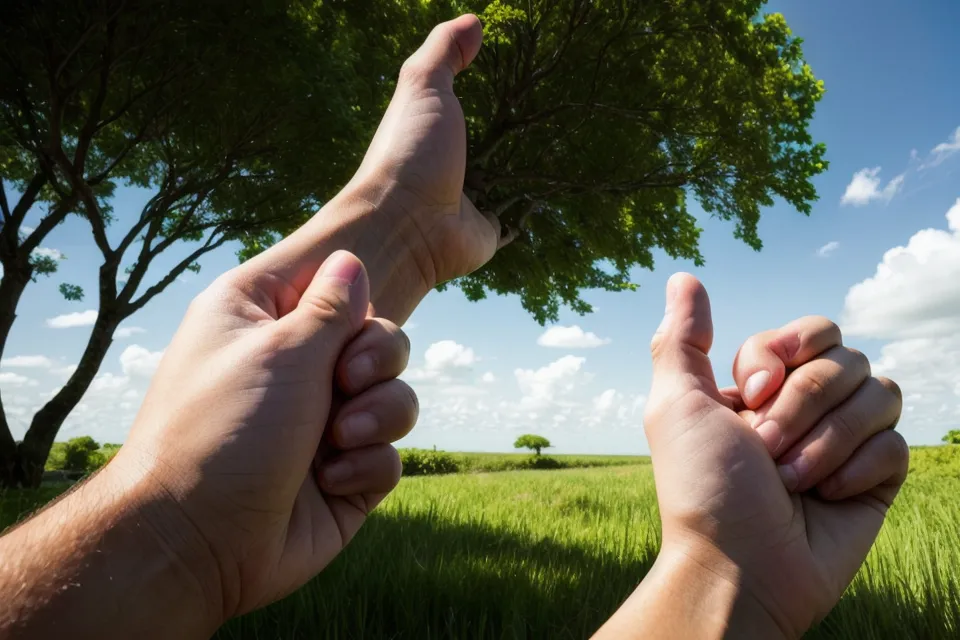
Palming is the simpler of the two techniques — rub your palms together for warmth, cup them over closed eyes, and let the world go dark for half a minute or so. It's a fast reset between meetings, nothing to set up, nothing to remember. Near-far focus takes more attention: hold a thumb a few inches from your face, focus on it, then shift to something farther away and hold that instead. It's less convenient, but it cycles the eye through a wider range than palming ever will. I use palming when I've got a couple of minutes between a standup and a pull request review, and near-far focus when I've got a longer break — lunch, a walk, anything past five minutes.

My wife asked me a while back where I'd gotten new glasses. I was wearing the same pair I've had for years — my eyes just weren't doing the end-of-day squint that usually gave me away. That's not the kind of change that shows up cleanly in a spreadsheet column, but it's the one that actually convinced me the relaxation side of this was doing something the active eye yoga drills never did.
Where a Failed Two-Month Supplement Test Fits In
Before any of that, I ran a two-month stretch on Nature Made Eye Health gummies, mostly because they were easy to find (the kind of purchase you barely think about) and the theory sounded reasonable enough. My fatigue scores across those two months looked almost identical to the weeks before I started — same afternoon dip, same evening ache. Which is a pretty on-brand result for someone who complains about screen time and still refuses to actually reduce it as a variable. That kind of flat result is easy to write off if you're not tracking daily, and it's exactly why I started tracking daily in the first place.
The supplement testing that actually moved a number was different. TheyaVue, which I cover in full in my TheyaVue Review, is a budget-friendly 24-ingredient formula, and it worked fine as an entry point without doing much beyond that. VisiFlora is the one that actually lowered my baseline — not the peak fatigue on a bad day, but the floor I'd land on after a good one. I've broken the formula-by-formula comparison down in Decoding Digital Eye Strain: My 14-Month Experiment, if you want the granular version.
I still pair the near-far cycles with one VisiFlora capsule a day — the exercise handles the muscle side, the capsule is just there so recovery can keep up between sessions. Where the 20-20-20 rule works the clock, a fixed distance on a fixed interval, this comparison works the focusing muscle directly, testing deliberate relaxation drills against a habit that never quite kept pace with my afternoon dip. Ingredient ratios and full formula breakdowns, gut-related absorption, workspace lighting, supplement cycling, dry eye versus general fatigue, my own tracking method, and how skeptical my optometrist is about all of it — those are each their own rabbit hole, and I've logged every one separately rather than cramming them in here.
Which Approach Actually Relieves Eye Strain for Heavy Screen Users?
If you've got fewer than five minutes and you're mid-sprint on a deadline, palming wins — it's fast, it needs nothing, and it interrupts the loop enough to matter. If you've got a real break and want the muscle to complete a full cycle instead of just resting, near-far focus wins, and it's worth pairing with something that supports recovery between sessions — the VisiFlora and near-far combination is the one piece of this whole comparison that held up week over week for me. Active eye yoga, the rotations and the aggressive stretching, didn't win in either category, and I've stopped recommending it to anyone doing this kind of screen work.
My friend Griffin, who is about as skeptical as developers get, still asks whether any of this is the technique or just me wanting my own tracking to be right after logging it for so long. It's a fair question, and I don't have a controlled trial to answer it — just a fatigue score that reads lower on weeks I do the relaxation work than weeks I skip it, regardless of what I want to be true. If you're weighing the same choice I was, start with palming and near-far focus since neither costs anything, and treat VisiFlora here as the optional layer once you know the technique side is actually working for you — the 60-day money-back window means you're not stuck with it either way. For the rest of my screen-time setup, I've laid it out in How to Relieve Visual Fatigue After Months of Remote Web Development.