My cursor is parked in the middle of a merge conflict I have reread four times, and the blue light glasses sitting six inches from my keyboard are doing absolutely nothing to stop the dull push behind my eyes. That ache used to show up like a scheduled job — reliable, predictable, and completely indifferent to whatever pair of yellow-tinted lenses I had on. Quick disclosure before we get into it: this article contains affiliate links, and if you buy something through one of them I earn a commission at no extra cost to you. Everything here comes from fourteen months of tracking my own screen-fatigue patterns, testing eye supplements, and trying to separate real signal from marketing noise around digital eye strain — I'm not an optometrist, just a developer-health nerd who got tired of his eyes footing the bill for his career.
The Debugging Process My Glasses Couldn't Finish
Glasses were the first fix I reached for. An optometrist had already used the phrase Computer Vision Syndrome during a visit, and the tidy explanation was that a narrow band of the nanometer spectrum — the part where blue light sits — was the villain. So I bought the yellow-tinted pair, wore them religiously, and added the 20-20-20 rule on top: stare at something twenty feet away for twenty seconds, every twenty minutes, like clockwork. It helped a little. It did not touch the mid-afternoon wall, and I started suspecting the rule alone was never built to fix whatever was actually going on underneath.
Cutting my weekday screen time to eight hours was the next experiment, logged carefully in a screen-time tracker app so I couldn't fudge the numbers later. It did not work, or at least not on its own. The mid-afternoon wall showed up right on schedule whether I'd logged six hours at the keyboard that day or ten, which told me the problem wasn't purely about total exposure. Something else was going on, and glasses plus a shorter workday weren't going to debug it by themselves.
What Fourteen Months of Testing Eye Supplements Actually Showed Me
Once glasses and timers weren't cutting it, I started a plain markdown log — fatigue impressions, timing, rough monthly cost ranges, which supplement I'd taken and when. Soren Tabata, a developer I know from a Slack community for independent contractors, has been running something similar for longer than I have; we've never actually met in person, but we trade spreadsheets most months, and his version makes mine look lazy by comparison. The pattern that jumped out fastest was about absorption rather than ingredient count. Early on, during a stretch where I was buried in a project and grabbing whatever was cheapest, I was swallowing budget formulas packed with two dozen different ingredients, on the theory that more must be better. It mostly wasn't. A formula built around lutein and zeaxanthin in a deliberate ratio seemed to do more with less, and I stopped assuming a longer ingredient panel meant a better result.
Checking the actual ingredient panel became part of my own routine after that, not just the marketing copy on the bottle. A reader named Priska Mwenda, who does copywriting work and emailed me after a post I wrote touching on gut health and eye fatigue, told me she won't even consider a supplement unless the full ingredient list is posted somewhere she can read before buying. That's a stricter filter than I used for my first few months of testing, and I wish I'd adopted it sooner. My own optometrist, when I eventually brought up supplements, was polite but clearly unconvinced — a reasonable stance, honestly, and part of why I kept running my own log instead of trusting a label.
Comparing VisiFlora, iGenics, and TheyaVue
Seven different supplements rotated through that log over fourteen months, and cycling through them one at a time — never stacking two at once, so I could actually tell what was doing what — is the only reason any of this data means anything. The full breakdown lives in How I Tracked Seven Eye Supplements to Save My Vision from Three-Monitor Burnout, but three of the seven earned a permanent spot in my rotation. VisiFlora ended up at the top of that list — a single daily capsule, which matters more than it sounds like when you're the kind of person who forgets a three-pill morning routine by Wednesday. I also spent a stretch Comparing TheyaVue and VisiFlora for Late Afternoon Visual Fatigue, and while TheyaVue's budget-friendly, multi-ingredient formula is a reasonable place to start, it never matched VisiFlora for long-stretch stamina in my own tracking. iGenics is the other one that stuck around — a well-regarded option that took noticeably longer to show up in my fatigue scores, but it got there eventually.
What Actually Works
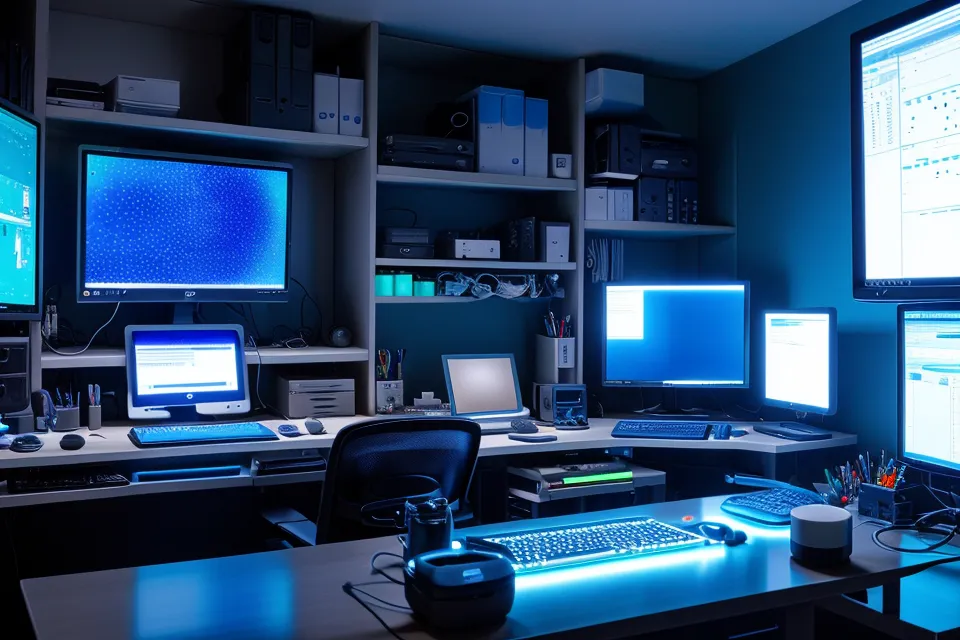
Some of the change came from the desk itself, not the capsules. My setup wraps three 27-inch monitors in a shallow arc across a U-shaped standing desk that runs along two walls of what used to be a spare bedroom, and I added a strip of warm, dim light behind the center screen so the room doesn't swing between a bright display and a dark wall every time I look up. The east-facing window gets blackout shades pulled most of the way down by midday now, mostly to kill the glare that used to bounce off all three screens at once. None of that shows up in a supplement review, but it's part of the baseline that makes the supplements easier to evaluate — fewer variables, cleaner signal.
Four weeks into logging VisiFlora specifically, my wife asked where I'd gotten new glasses. I hadn't gotten any — same frames I'd had for a couple of years — but apparently whatever I was doing with my face while looking at a screen had changed enough that she noticed it before I'd written it down myself. That's the kind of signal that doesn't show up in a spreadsheet column, but it's the one that actually convinced me something had shifted.
Not every eye complaint I've had belongs in this particular log, and lumping them together was my first mistake. The gritty, need-drops feeling of actually dry eyes is a different problem than the heavy, achy fatigue I'm describing here, even though I spent a few months treating them as the same bug. An occasional eye twitch during a long pairing session turned out to be its own unrelated thing too, and so did the rare floater drifting across my vision — neither one tracks with how tired my eyes feel on a given day. Night driving got harder at some point as well, which is a separate enough issue that I keep notes on it elsewhere. The closest relative to screen fatigue, in my experience, is the dull ache from focusing muscles working overtime on a monitor that's sitting closer than it should be — that one actually responds to the same fixes as the rest of this list.

Three Monitors, One Desk, and a Quieter Afternoon
These days the mid-afternoon blur is mostly gone, and when it does show up, it clears faster than it used to — recovery time matters almost as much as whether the symptom happens at all. I still take real breaks; no capsule replaces actually looking at something that isn't backlit, and on the days the log says I need one, I'll walk down to the Barton Creek Greenbelt trailhead and let my eyes rest on trees and distance for twenty minutes instead of staring at a countdown timer. If you want the full rundown on the supplement that moved the needle most for me, I wrote up Honest VisiFlora Review After My Long Stretch of Remote Work after using it specifically through a long stretch of remote-work strain. The lesson that actually transfers, if there's one, is that glasses, supplements, and desk setup are three different layers of the same system, and testing them one at a time — not all at once — is the only way to know which layer was actually broken.
Every setup is different, and what fixed my triple-monitor strain in an old Austin bungalow might not map onto yours — different monitors, different hours, different baseline. But if that mid-afternoon wall sounds familiar, checking the current pricing and ingredient panel on the vendor page before you commit to anything is worth the five minutes, and talking to your own optometrist first is worth even more than that.
| Product | Rating | |
|---|---|---|
| VisiFlora Top Pick | 9.4 | Read More → |
| iGenics | 8.8 | Read More → |
| TheyaVue | 8.1 | Read More → |
VisiFlora
Pros
- ✔ Targets the gut-eye health connection for better absorption
- ✔ Single-capsule daily dose fits into a busy workflow
- ✔ Noticeable reduction in late-afternoon screen blur
- ✔ 60-day money-back guarantee provides a safety net
Cons
- ○ Only available for purchase through the official website
- ○ Higher price point than basic multi-ingredient vitamins