Text on my center monitor doubles before it blurs. That's the order it happens in, and once you've watched it happen enough afternoons in a row, you stop treating it as a surprise and start treating it as a diagnostic signal. A tight, two-beat throb lands right behind my brow a few minutes after that — the kind that makes you reach for the bridge of your nose instead of the keyboard. My optometrist had a name for the whole pattern: asthenopia, which is just digital eye strain with a longer spelling, brought on by doing remote developer work on three bright monitors for a living.
Quick disclosure before any of this goes further: I bought and tracked every supplement named in this piece myself, logging fatigue and dryness notes alongside regular workdays. Some of the links below are affiliate links, meaning I earn a small commission if you buy through them, at no extra cost to you. I'm a freelance developer, not an optometrist or any kind of medical professional, so treat this as one guy's testing notes, not a diagnosis.
Digital Eye Strain Finally Had a Name
Dark-mode terminals across three displays were doing something ordinary ergonomics advice never accounts for: most of what I'd read assumed a bright room and black text on a white page, not a dim one with high-contrast syntax highlighting glowing for hours on end. My eyes never really got a break from the contrast, and that mid-afternoon dip became predictable enough that I could almost set a calendar reminder around it — not proof of anything by itself, just a pattern worth tracking. This wasn't the foggy, hard-to-concentrate feeling some people describe either. It was specifically visual, a fatigue that lived in my eyes and nowhere else.
The first thing I tried cost nothing: cranking f.lux to its warmest amber setting and just leaving it there all day, screens tinted like a submarine control room. It didn't touch the afternoon throb at all. A color shift doesn't do much if the real problem is how long and how hard you're focusing, not the color temperature.
Tweaking editor themes and terminal color configs came next — the kind of thing I wrote up in my earlier notes on screen brightness adjustments — but display tweaks alone weren't fixing what was fundamentally an endurance problem, not a settings one. That's roughly where I stopped treating this as a configuration issue and started treating it as a nutrition and workflow issue instead.
Seven Supplements, Fourteen Months, One Spreadsheet
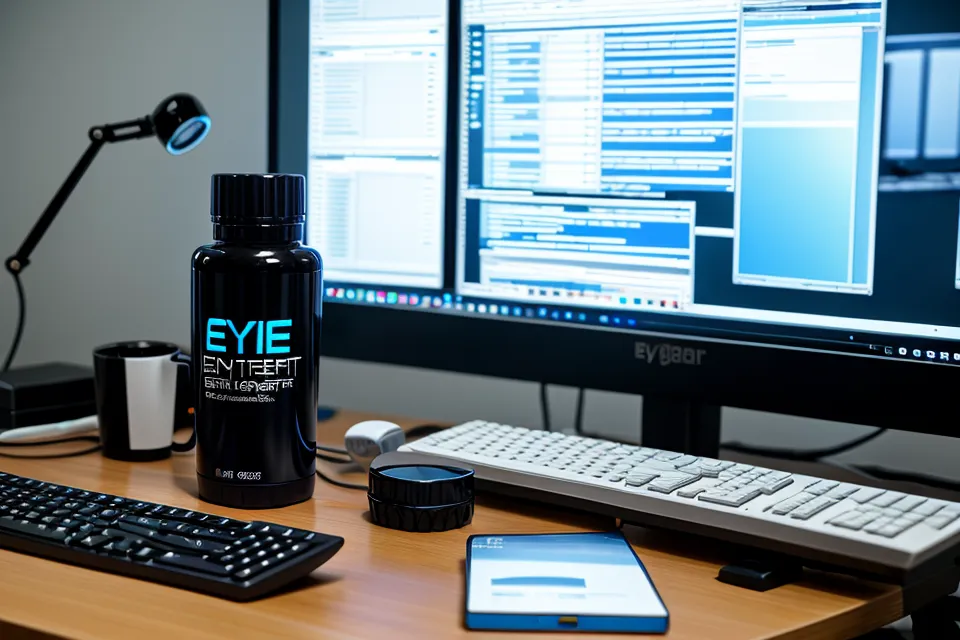
I ended up treating my eyes like an underperforming server cluster — track the telemetry, isolate the bottleneck, run the experiment properly. Across fourteen months I rotated through seven different eye supplements, logging a daily fatigue and dryness score next to my regular commit history. The full log lives in my The Austin Coder’s Guide to Screen Fatigue: My 14-Month Eye Supplement Experiment, if you want the week-by-week version.
Lutein and zeaxanthin show up in nearly every formula's ingredient panel, and the ratio between the two seems to matter as much as either number alone — that's a deeper comparison I'm saving for its own post, since cramming it in here would turn this into a chemistry lecture nobody asked for. For this round, I cared more about which bottles actually held up day after day than which label had the fanciest ingredient list.
Plenty of the cheaper bottles were underwhelming in practice — padded out with filler ingredients, or dosed low enough that gritty, tired eyes during long debugging sessions never really let up. I compared the specifics in my breakdown of VisiFlora, iGenics, and TheyaVue, but one bottle out of the seven ended up earning a permanent spot next to my keyboard.
Why iGenics Stuck Around
I started taking iGenics as part of my morning routine, alongside coffee instead of in place of it. The formula leans on twelve vision-support ingredients — a mix of botanical extracts and the usual carotenoid players aimed at general oxidative stress — and since pricing and formulations shift over time, the manufacturer's own site is the place to check current details rather than anything I quote here. My first impression was lukewarm: the capsules are bigger than I expected, enough that I needed a full glass of water to get one down with breakfast, and nothing about week one felt like a breakthrough.
That tracks with how I think about anything nutritional, though. It's less like installing a patch and more like rebuilding a database index while the app keeps running — nothing visibly changes for a while, and then the slow queries just aren't slow anymore.
By about week eight, the evening notes started shifting in a way worth tracking: scrolling through a long file on my second monitor one evening, the text at the far edge of the screen stayed sharp, not the slightly-smeared version by hour seven I'd gotten used to. The band of tightness across my temples that usually showed up before a long afternoon review session wrapped had quietly stopped showing up on schedule. Even my typing changed without me deciding it should — by eleven most nights my keys get noticeably quieter, like my hands ease off once the ache used to set in, except the ache wasn't setting in anymore.
After one especially long sprint — the kind where three displays run for most of twelve hours — I shut down for the night and realized I hadn't once reached for eye drops the whole afternoon. That stuck with me more than any spreadsheet number. Over the following weeks, the daily log confirmed what that evening had already suggested: iGenics was holding a steadier baseline than any of the other six bottles had managed.
Keeping the Rest of the Setup Honest
None of this replaces basic habits. I still run the 20-20-20 rule — twenty feet, twenty seconds, every twenty minutes — off a cron job, because relying on memory to interrupt a flow state never once worked for me. A supplement can't fix bad defaults; it just gives good defaults room to actually hold.
Supplements don't cure digital eye strain, and they definitely won't fix an actual refractive problem — if your vision itself seems to be changing, that's a conversation for an eye doctor, not a bottle. For the narrower problem of grinding through long screen days without your eyes filing a formal complaint by mid-afternoon, consistent nutritional support has done more for me than anything else I tried first. Whether that's worth the shelf space is a fair question, and for me the answer has held steady for months running.
If you want to see the exact formulation and current availability, the official iGenics page has the up-to-date details. My old college friend Dex Harrington asked for my notes once his own job went fully remote, started taking it off the back of them, and still checks in every so often with the same unfiltered honesty he's always had — some weeks it's going fine, other weeks it's "my eyes still feel like sandpaper by Thursday," which is about as real a review as I could ask for. Luciana Ferber, a product manager I used to work with, still texts me for the one-line verdict before she'll read any of my longer posts, and the one-line verdict here hasn't changed in months: this is the bottle that stayed on the desk after the other six didn't. Fourteen months of logging taught me that the fix was never going to be one setting or one product — it was the boring consistency of measuring the same thing every day, until the measurements stopped being alarming.