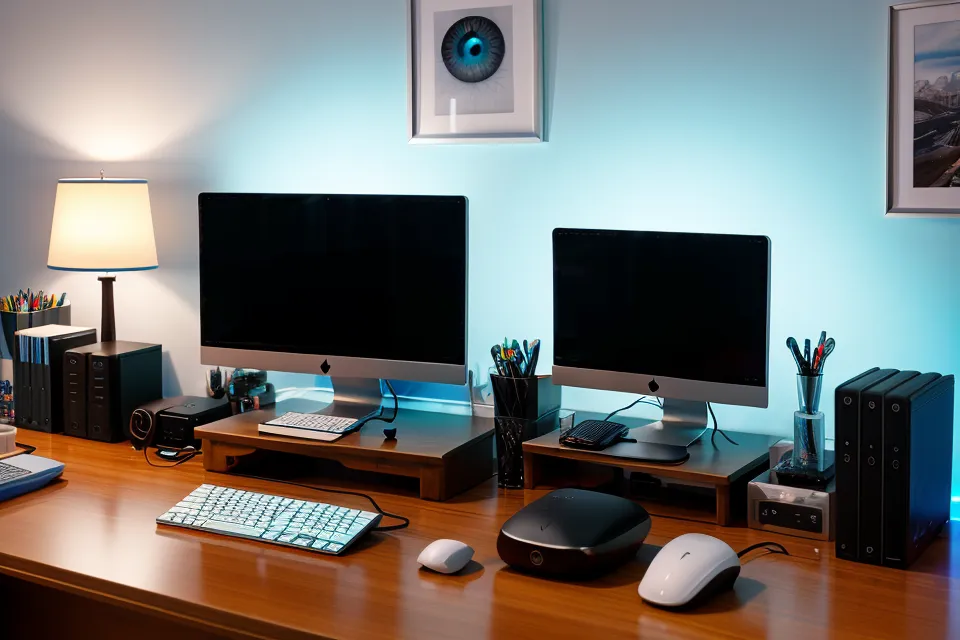
Finding what actually fixes screen-induced eye fatigue and the screen glare that comes with it matters when working fewer hours as a remote developer simply isn't an option. That search sent me down a supplement-testing rabbit hole while running three monitors for a living.
Quick disclosure up front: this site runs on affiliate links, including a couple below. Buy through one and I earn a commission at no extra cost to you — I've paid for and tested everything here myself. I'm not a doctor or an optometrist, just a developer who stares at code all day.
What Screen Glare Does to a Three-Monitor Setup by Afternoon
Three years into remote work, I've solved the commute problem and created a new one: three monitors add up to more screen surface than my face really wants to deal with for most of a workday. The headache pattern became predictable — a dull pressure behind the brow that showed up every afternoon like a scheduled cron job, plus a rough, gritty drag in my eyelids every time I blinked by the end of a long stretch. My optometrist called it digital eye strain, which sounded clinical until I started actually tracking it.
One tell I trust more than any tracking spreadsheet is the sound before the discomfort: my laptop fan stepping up a pitch the moment some build job starts chewing through memory, right around the same stretch of afternoon my eyes start losing patience with the glare. I wrote up the broader troubleshooting process in how to relieve eye strain from coding all day long, back before supplements entered the picture at all.

Do Blue Light Glasses Actually Help?
Like most developers in Austin, blue light glasses were my first move. They felt like the obvious patch, but a few months in, I noticed they were making things worse in a genuinely counterintuitive way. Wearing them gave me a false sense of protection, which meant I kept my eyes open wider and blinked less than I should have, since the tint felt like a shield doing the work for me.
Relying on a physical filter alone was the mistake. It papered over the real issue, which was that my eyes were still under-supported while absorbing hours of high-intensity screen glare every day. What I needed was something working from the inside, not just a tint on the outside. I got into that whole detour in more detail in Beyond Blue Light Glasses: A Web Developer's Search for Eye Relief.
The Eye Drops and Filters That Didn't Work
Eye drops were the next stop, and this is the part I don't see many people admit to — a stretch of using preservative-heavy drugstore drops every single hour, treating the symptom without touching whatever was actually causing it. Relief lasted about ten minutes each time, then the grittiness came right back, sometimes worse than before. The sensation itself never quite matched classic dry eye, either — it read more like fatigue than dryness, even though the two get lumped together constantly on forums.
How I Judge an Eye Supplement Before Buying It
Dex Harrington, an old college friend who went fully remote a couple of years back, asked me for my supplement notes recently and made it clear he wanted the two-bullet version, not a spreadsheet link. Fair request. So here's the short version: out of seven supplements I've tested at this point, I judge each one on ingredient breadth, the return policy, and what it actually costs to maintain long-term, in that order.
Ingredient breadth matters because screen-driven fatigue isn't a single-nutrient problem — it's closer to a system with several bottlenecks at once, so a formula built around one or two antioxidants is going to miss most of what's actually going on. That was my issue with VisiFlora: solid formula, a genuine gut-eye angle, and a 60-day money-back guarantee that made the premium price easier to swallow, but weighed against my specific glare-heavy routine, the general-wellness framing didn't target what I needed closely enough. The full log of that stretch is in Honest VisiFlora Review After My Long Stretch of Remote Work.
iGenics was the other contender — a well-known name built around twelve vision-supporting ingredients, respected, but noticeably slower for me to notice any difference from, and the capsule itself is on the larger side if that kind of thing bothers you. Between the two, neither fully matched what a three-monitor glare problem actually needs, which is where TheyaVue entered the log.
Where TheyaVue pulled ahead was sheer formula density — twenty-four ingredients in the blend versus iGenics' twelve, which as a developer I can't help thinking of as more bandwidth for the same underlying problem. That's not a search for one hero antioxidant like lutein and calling it done; it's a broader spread of support for a system under constant strain from refocusing on a screen all day.

Why TheyaVue Over VisiFlora or iGenics?
Luciana Ferber, a former collaborator of mine who's pragmatic to a fault about self-care, only keeps a habit that survives contact with an already packed schedule — one capsule, no elaborate ritual, or it doesn't happen. TheyaVue clears that bar for me too, and it's consistently the most budget-friendly option in this category, which matters when you're maintaining a routine for the long haul rather than switching products every few months.
I put TheyaVue and VisiFlora head-to-head in more detail in Comparing TheyaVue and VisiFlora for Late Afternoon Visual Fatigue, if you want the fuller comparison. Alongside it, I still stick to the 20-20-20 rule — glancing at something twenty feet away for twenty seconds every twenty minutes — because no capsule replaces actually looking away from the screen. The clearest sign something shifted was almost embarrassingly mundane: catching my own reflection in the bathroom mirror one morning and noticing the whites of my eyes looked noticeably less pink than they had a couple of days before, no spreadsheet required.
Where TheyaVue Still Falls Short
None of this makes TheyaVue a cure, and I'd be lying if I framed it that way. I still have to remember to look away from the screen, and no supplement fixes a chronic inability to close the laptop at a reasonable hour, which is a personal failing no ingredient list addresses. My optometrist was openly skeptical about supplements in general when I first brought it up, and that skepticism is fair; the honest position is that a pill won't catch an actual structural issue with your eyes, so a real exam still matters more than any product on this page.
The Bottom Line for Heavy Screen Use
These days TheyaVue is the one that stays in the daily rotation, paired with the 20-20-20 breaks and slightly better monitor calibration instead of relying on tinted lenses. Screen glare hasn't disappeared — that's just the nature of the job when three monitors are your workspace — but it no longer runs my afternoons the way it used to.
If you're dealing with the same kind of screen-driven burnout, look at what's supporting your eyes internally before buying another gadget for your desk, and loop in your own optometrist before starting any new supplement — they can check for structural issues a pill was never going to fix. For the budget-friendly, twenty-four-ingredient option I ended up sticking with, you can check out TheyaVue here.